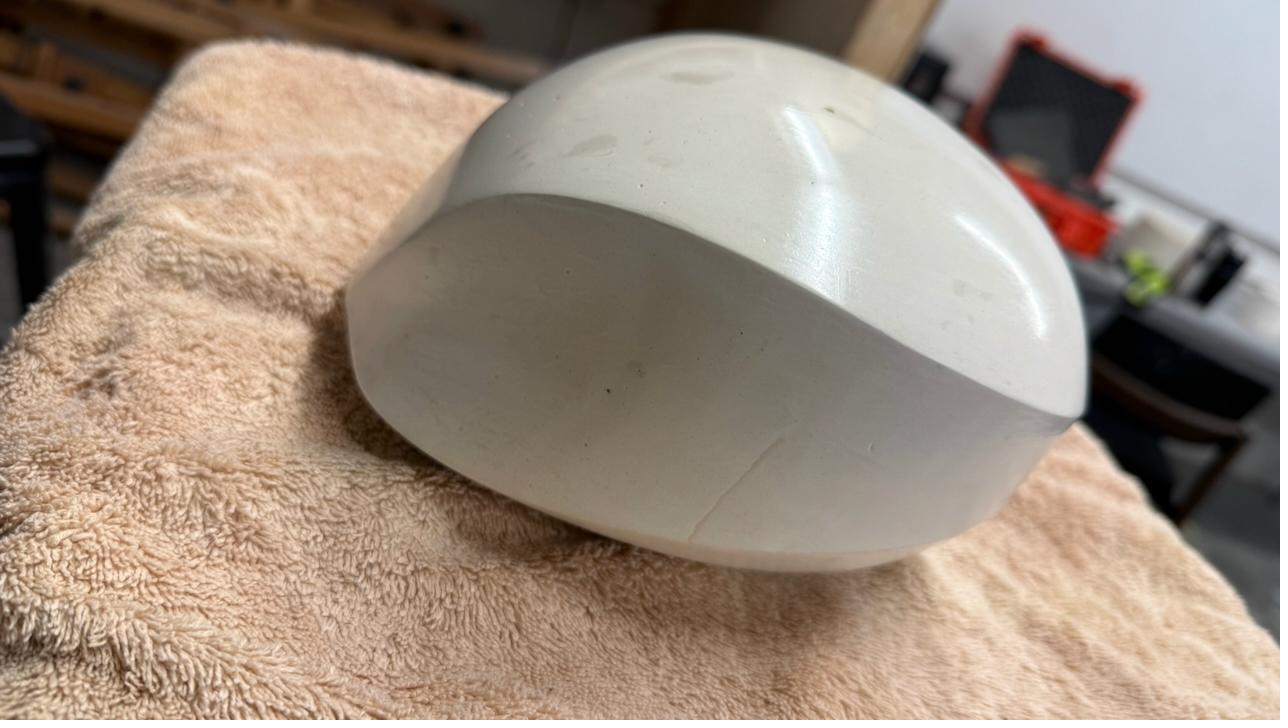
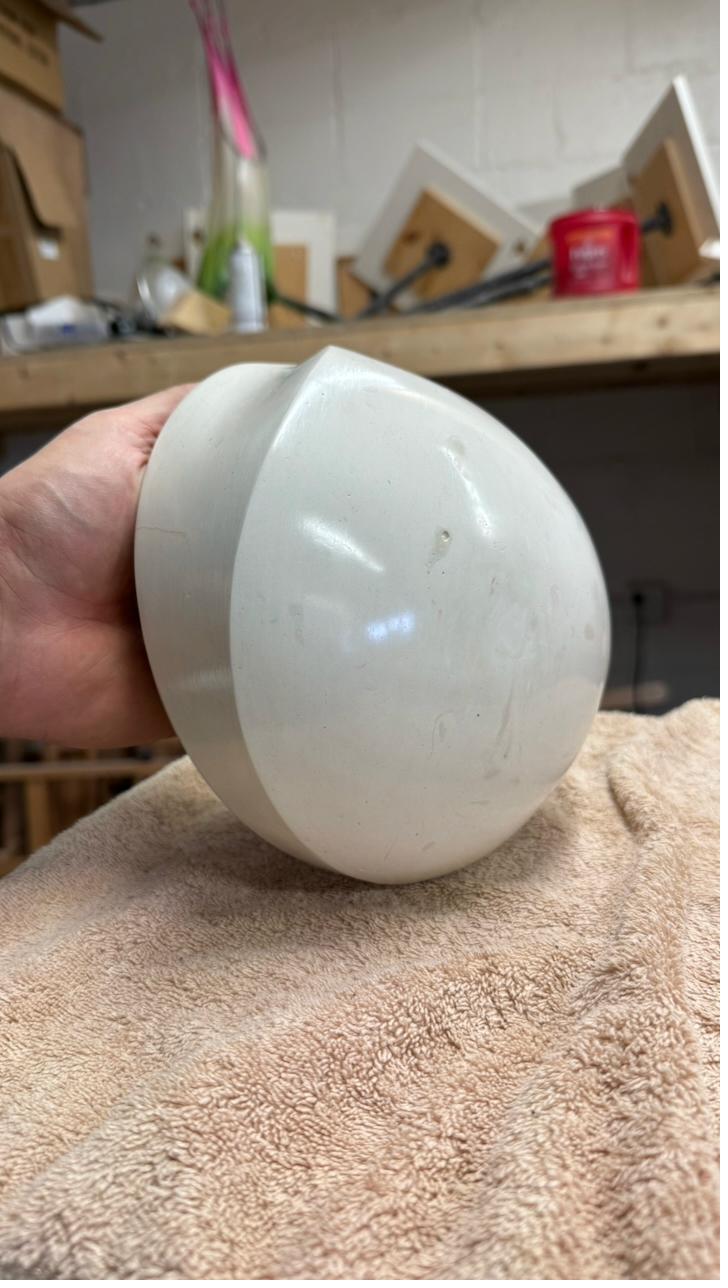
Poured hydrocal blank from bucket mold (same technique as Cobra). 2 days of subtractive shaping.
Base Note
Needs a base because it’s too large to hold, but hesitant for two reasons: (1) hydrocal is soft and drilling into it is risky, (2) a base fixes the orientation, committing the piece to one view when it holds multiple readings. Undecided on material and approach.
Viewing Note
Passages referencing "Tulip (2)" describe a different view of the same sculpture, not a separate piece. Two images document different angles.
Class Location
2-day intro workshop on pouring blanks for carving and shaping (separate from Cobra)
Type
hydrocal sculpture
Date Created
Summer 2025
Ownership
Still in artist’s possession.
Finish
Mop n Glo sealant, then paste wax. No primer.
Material Note
Hydrocal allows rapid exploration of form compared to wood and stone, but its relative softness makes developing detail and crisp edges more difficult. May explain why hydrocal pieces are simpler than wood and stone work.
Origin Story
Made during a class on pouring blanks for carving and shaping. Poured hydrocal into a bucket and carved the blank down over 2 days. Remarkably fast compared to wood and stone — couldn’t believe how quickly it came together.
Dimensions
~9 inches tall, 6 inches across, 4 inches thick
Status
Complete but considering how to mount it on a base.
Materials
hydrocal Gypsum cement. Sealed with Mop n Glo.hydrocalpoured
Formal Elements
intentional cutClean geometric mark that declares human decisionagency announced, deliberate intervention
closed formSelf-contained form that doesn't need anything externalself-sufficiency, autonomy, completeness
Embodies
autonomyThe quality of self-governance, of originating from within rather than being imposed from without.
Enacts
material-against-expectation Working opposite to what the material wants. Wood becomes spherical, stone becomes soft, HydroCal becomes organic, clay gets carved like stone.